
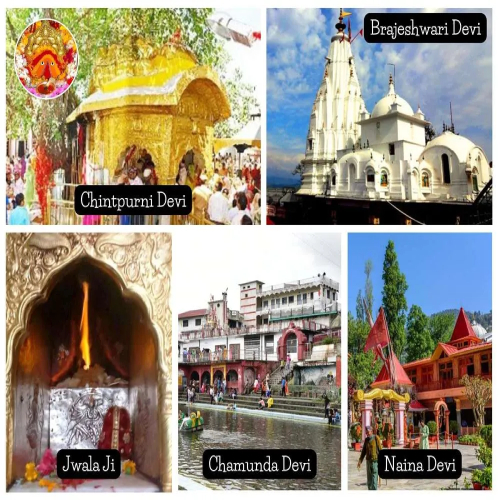
Introduction: Welcome to Dev Bhoomi, The Land of Divine Power
At the core of the spiritual landscape of Himachal is the eternal mythology of **Shakti Peethas**. According to legend, these holy sites are the points where the body parts of Goddess Sati, the consort of Lord Shiva, fell, thus creating mighty vortexes of cosmic energy. Today, a pilgrimage circuit by the name **Panch Devi Darshan** attracts millions seeking blessings from five of the most potent and revered Mother Goddess shrines.
From the Eternal, mysterious flames of “Jwala Ji” to the wish-fulfilling presence of “Chintapurni”.These temples are more than architectural wonders. They stand forth as potent reminders of the strength, compassion, and eternal presence of Goddess Durga JiA.
Join us on a journey of discovery through these five holy shrines-**Naina Devi, Chintpurni, Jwala Ji, Bajreshwari commonly known as Kangra Devi, and Chamunda Devi**-in pursuit of history, mythology, and the transforming spiritual energy of the most cherished goddesses of the Himalayas.* Hook: Initiated with the title “Dev Bhoomi“, which itself is a reverential name, and a setting that is described as majestic.
What is Shakti Peethas Of Maa Durga
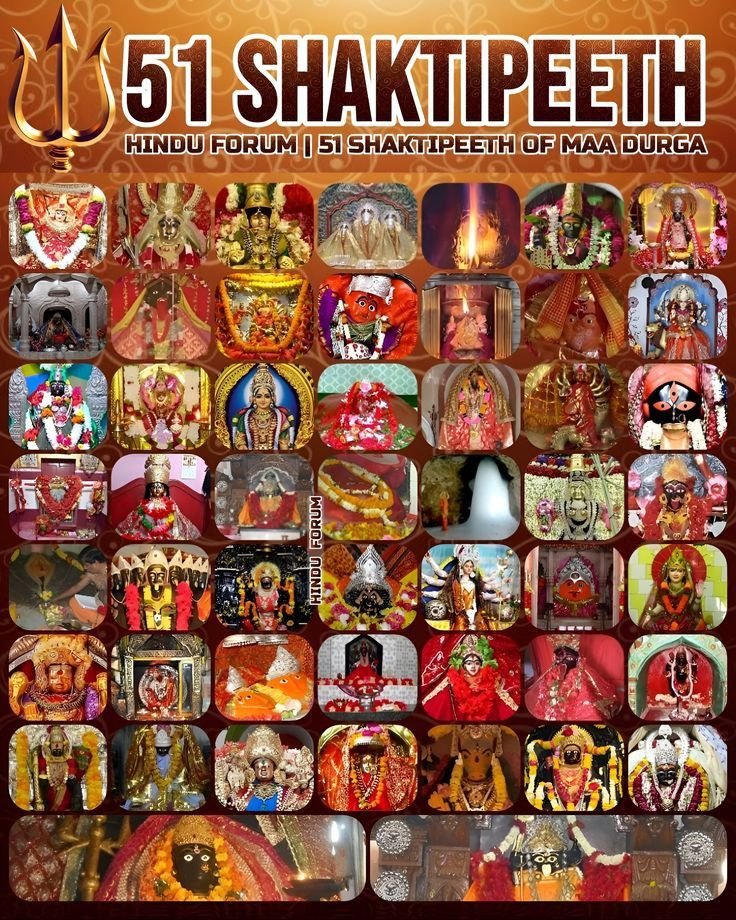
The **Shakti Peethas** (Sanskrit: *Śakti Pīṭha*, meaning “Seat of Power”) are highly significant shrines and pilgrimage destinations in Hinduism, particularly for the devotees of **Shaktism**, the tradition that worships the Mother Goddess (Shakti/Devi) as the supreme being.
These sites owe their origin to a great cosmic legend that involved “Sat”, the first wife of Lord Shiva.
1. Sati’s Sacrifice – The Legend
“The Conflict” Sati was the daughter of “Daksha Prajapati”a mighty ruler. She married Lord Shiva against her father’s will. Daksha, who harbored extreme disdain for Shiva’s ascetic ways, set up a great ritual sacrifice (*Yajna*) and deliberately invited all gods and goddesses *except* Sati and Shiva.
“The Self Immolation” Feeling insulted and unable to bear the public humiliation of her husband, Sati went uninvited to the *Yajna*. After being further insulted by her father, Sati immolated herself in the sacrificial fire, giving up her life as a protest.
“Shiva’s Grief and “Tandava”: Smitten with grief, coupled with intense anger, Lord Shiva lifted the lifeless body of Sati and started performing the **Tandava**-the cosmic dance of destruction-and wandered across the universe. It had the potential to disrupt the cosmic order.
Intervention by Vishnu:- Lord Vishnu intervened with his **Sudarshana Chakra**-a divine discus-to dismember Sati’s body and restore Shiva to his senses, thereby saving the universe.
2. The Birth of the Peethas
* The Sacred Spots: the Different parts of Sati’s body, after the cut spread at the many places of the earth.
* Seats of Power: Each one of these places became a Shakti Peetha, a powerful center pulsating with the divine feminine energy called Shakti.
3. Number and Location
While there are different scriptures that refer to different numbers, such as 51, 52, 64, and 108, the most commonly accepted and respected number of main Shakti Peethas is **51**. * Geographically, these shrines are scattered across modern-day **India**, and its neighbors like **Nepal, Bangladesh, Pakistan**, and **Sri Lanka**. The Shakti Peethas, as a whole, represent the deep connection between the masculine and feminine (Shiva and Shakti) energies and also serve as essential pilgrimage sites for earning spiritual blessings and liberation.
Chintpurni Devi Temple, Himachal Pradesh – A Complete Travel & Devotional Guide
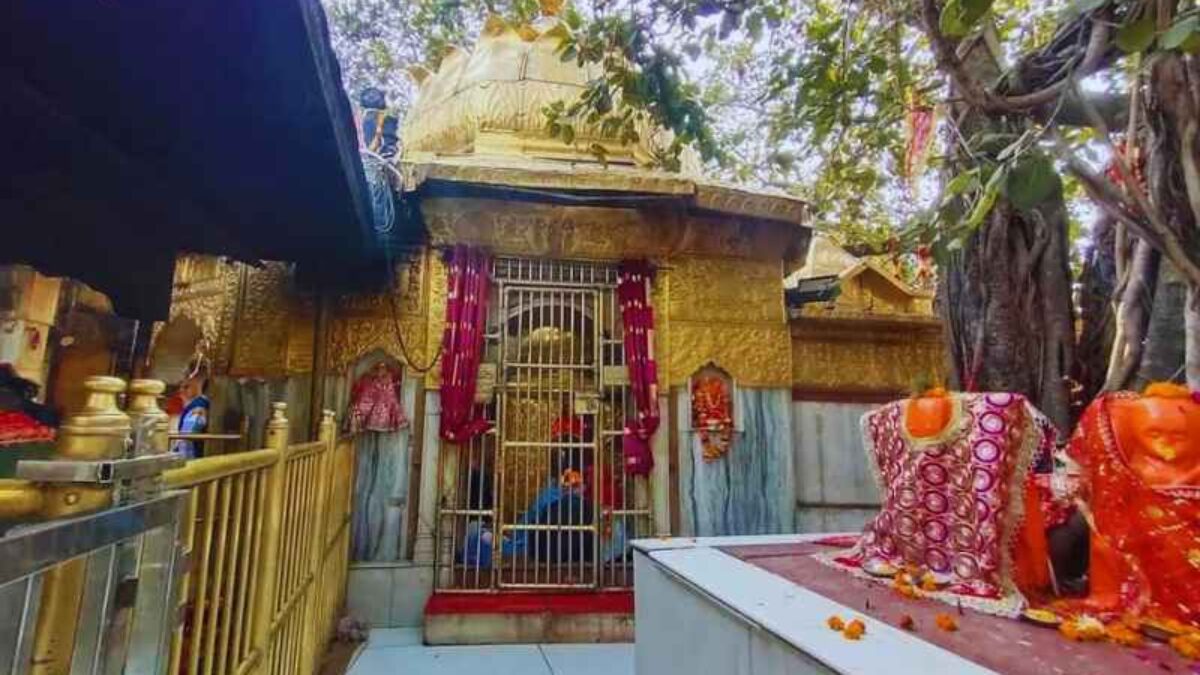
Mata Chintpurni: The Goddess Who Removes All Worries
Perched on a ridge of the scenic Sola Singhi range in the Una district of Himachal Pradesh, the **Mata Chintpurni Devi Temple** is among the most significant and most venerated pilgrimage destinations of India. Its name, literally meaning “the Goddess who relieves worries” (*Chinta* meaning worry and *Purni* meaning fulfiller or remover), draws innumerable devotees who come seeking solace and the fulfillment of their most heartfelt desires.
This sacred shrine is celebrated as one of the 51 **Shakti Peethas** or holy places associated with the body parts of Goddess Sati. It is believed that this is where Sati Devi’s **feet** or consciousness fell, establishing it as a very powerful vortex of the Divine Feminine energy.
The presiding deity, Mata Chintpurni, is also known as **Mata Shri Chhinnamastika Devi** and is often depicted in a form suggesting self-sacrifice to achieve spiritual liberation by separating the mind from the body. History states that the temple is associated with a great devotee, **Pandit Mai Das**, who is believed to have built the shrine several generations ago after receiving a divine vision from the Goddess.
Today, the temple serves as a beacon of faith and attracts large congregations, especially during the **Navratri** festivals, where pilgrims patiently queue up for a glimpse of the Goddess in the form of a **pindi**-a round stone idol-housed in the *garbha griha* or the sanctum sanctorum. It remains an important stop on the holy Panch Devi circuit of Himachal Pradesh.
The Mata Chintpurni Devi Temple represents traditional North Indian architecture, combined with an atmosphere dominated by intense faith and devotion, a shared sense of community.
Temple Architecture & Structure
The architecture of the Chintpurni Temple is relatively simple, reflecting the regional North Indian style and evolving over centuries from its humble origins:
Structure and Material
The main temple is often a single-storied building constructed mostly with stone. It has a square base that most traditional Hindu temples have.
The Garbha Griha
The Garbha Griha forms the heart of this temple. The Goddess, Mata Chintpurni, is not depicted conventionally through an idol but as a **Pindi**-a holy, round stone image-which is adorned with flowers, scarves (*chunnis*), and clothes.
The Main Entrance
Usually, the temple faces North and sometimes the outside is covered with colored paintings depicting mythological tales and divine manifestations. The door leading to an inner shrine is at times plated with gold or silver.
Courtyard and Amenities
The temple is surrounded by an extensive complex featuring covered verandas and halls, mandapas, which act as congregation halls for devotees, mainly during major festivals like Navratri.
Sacred Banyan Tree
Inside the complex, there is an **old banyan tree**. Devotees tie threads or red *chunnis* (sacred scarves) to its branches, symbolizing their prayers or wishes that they hope the Goddess will fulfill.
Temple Atmosphere & Spiritual Feel
The ambiance at Chintpurni is defined by the pilgrims’ profound faith, creating a powerful spiritual energy.
The basic ethos is one of deep devotion. The name itself, “Remover of Worries” (*Chinta Purni*), explains that the pilgrims come with deep personal anguish and a desire for real solace and the granting of heartfelt wishes. This shared feeling of hope creates a deeply holy and emotional environment.
Vibrant Chaos and Order
During festivals, especially during the **Navratris**-which fall twice in a year-the atmosphere becomes one of vibrant chaos, religious fervor, or a combination of both. Long, serpentine queues (*darshan* lines) stretch on for hours, filled with devotees chanting, singing *bhajans* (devotional songs), and ringing the large brass bells at the entrance.
Devotional Offerings: The air is thick with the fragrance of incense, flowers, and the traditional offerings like *Halwa* – a sweet porridge, *puri* – fried bread, red-colored flags, and scarves; for red is the color of Goddess Shakti.
Scenic Backdrop
Situated on a ridge in the Sola Singhi Range of Shivalik foothills, there is a scenic view of the surrounding hills, particularly from the back of the temple complex. The natural beauty forms a tranquil contrast to the bustling crowds present in the temple. The spiritual environment is believed to get reinforced through the mythological placement of four Shiva temples, namely Kaleshwar, Narayhana, Muchkund, and Shiva Bari, in the four cardinal directions from Chintpurni, thus reinforcing a sense of divine protection for the Goddess. The overall feeling is that of emotional release and spiritual reassurance as if thousands are unburdening their troubles at the feet of the Mother Goddess.
How to Reach Chintpurni Temple
| Starting Point | Mode of Transport | Details | Approximate Travel Time |
| From Delhi | Flight+Taxi | Fly to Kangra Airport (DHM) (Gaggal Airport), Then, take a taxi. | ~4 hours (1.5-hour flight + 2.5-hour drive) |
| Train + Taxi/Bus | Take the train for Amb Andaura (AADR).Then take a taxi or bus. | ~5.5 hours (5.25-hour train + 30-min to 1-hour drive) | |
| From Chandigarh | Taxi/Private vehichle | Direct drive via road. | ~4 hours |
| From Una | Cab/Taxi | Direct drive via road. Una is one of the most accessible nearby cities. | ~1 hour |
| From(Delhi,Chandigarh,Una) | Bus (Cheapest) | HRTC (Himachal Road Transport Corporation) buses are Cheapest option. | According your pickup city. |
Important Tips for Devotees
- Carry water and light snacks
- Avoid visiting during peak afternoon hours
- Maintain cleanliness and respect temple rules
- If making a mannat, tie a sacred thread at the designated place
Brijeshwari Devi Temple, Kangra – A Sacred Shaktipeeth of Himachal Pradesh
Brijeshwari Devi, also spelt as Vajreshwari Devi and sometimes as Bajreshwari Devi, is a highly venerated Hindu goddess usually worshipped at the famous Brajeshwari Devi Temple in Kangra, Himachal Pradesh, India.
- The Deity
- Form of Durga: Brijeshwari Devi is considered a fierce form of Goddess Durga (Shakti), often associated with the thunderbolt (Vajra), which gives her the name Vajreshwari (Goddess of the Thunderbolt).
- Legend: One legend identifies her name with the slaying of a demon named Kalikala by a divine thunderbolt (Vajra).
- The Temple (Shakti Peetha)
- Location: The temple is located in the town of Kangra, in the beautiful Kangra district of Himachal Pradesh.
- Shakti Peetha: The temple is one of the 51 Shakti Peethas, the most sacred shrines in Shaktism-the Hindu tradition that worships the Goddess as Supreme Being.
- Significance: According to the most popular myth, this is the spot where the left breast (or sometimes the right chest/breast) of Goddess Sati’s body fell after Lord Vishnu severed it to stop Shiva’s destructive dance (Tandava).
- Worship: The Goddess is worshipped mainly in the form of a Pindi – a sacred stone or idol representing the deity inside the sanctum.
- Historical Context: The original temple is said to have been erected by the Pandavas of the Mahabharata epic. For its immense wealth, it was plundered a number of times by invaders, especially Mahmud of Ghazni. The present structure was rebuilt after the original was largely destroyed by the 1905 Kangra earthquake. Brijeshwari Devi Temple is a major pilgrimage destination, particularly during the festival of **Navratri. Or would you want to know more about its special traditions or where the temple exactly is?
The Brijeshwari Devi Temple (also known as Bajreshwari Mata Temple or Kangra Devi Temple) is located in Kangra, Himachal Pradesh, India.
It appears you may be referring to the one in Kangra (which is also known as Nagarkot or Baug in some local contexts), as it is the most famous temple by that name.
Here is a guide on how to reach the temple via different modes of transport:
How to Reach Brijeshwari Devi (Kangra)
✈️ By Airoplane
- Nearest Airport: Kangra-Gaggal Airport (DHM), which is approximatel 10 km from the temple.
- From the Airport: You can hire a taxi or take a local bus/auto-rickshaw for Brijeshwari Devi Temple.
🚂 By Trains
- Nearest Toy Train Station: Kangra Mandir Railway Station or Kangra Railway Station (KGRA), which are about 5 km away.
- Nearest Indian Railway Station: Pathankot Junction (PTK), which is nearly 100km away.
🚌 By Bus/Personal Vehicle
- By Bus: Kangra is well-connected by road to major cities in Himachal Pradesh and neighboring states like Delhi, Chandigarh, and Punjab.
- Near By Cities.
- Dharamshala: ~20 km
- McLeod Ganj: ~30 km
- Chandigarh: ~220 km
- Delhi: ~465 km
- By Taxi/Car: You can drive directly or hire a taxi from any nearby city & travel by your personal Vehichle.
Conclusion
The Brijeshwari Devi Temple in Kangra is a crucial Shakti Peetha and an embodiment of strong faith and resilience.
Although this temple had to be rebuilt time and again throughout history, including the most devastating earthquake of 1905, it was always rebuilt. It stands today as a beacon to devotion, attracting pilgrims who come seeking the blessings of Goddess Vajreshwari-that is, the Goddess of the Thunderbolt-a significant spiritual and historical landmark.
Table of Contents
“Mystery of the Ever-Burning Flames: Story of Jawalamukhi Devi”
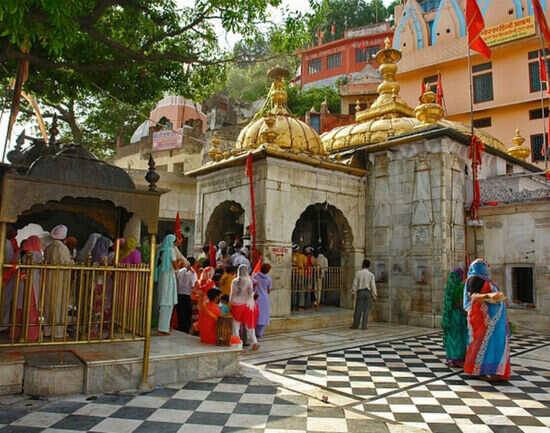
The Shri Jwala Ji Temple is among the very revered and unique Hindu shrines in India, Situated in the pic Kangra district of Himachal Pradesh. Dedicated to Goddess Jwalamukhi, the “Goddess of the Flaming Mouth.
One of 51 Shakti Peethas:– It is known as one of the 51 Shakti Peethas-the most sacred spots of Goddess Shakti (Sati). According to legend, it is the place where Goddess Sati’s tongue fell to earth.
- The Eternal Flames:– Central within the temple are nine naturally burning flames issuing from fissures within the rock, which have burned steadily for many centuries, without a known source of fuel. Being the direct manifestation of the Goddess, these flames are worshipped as such.
Worship without an Idol:-Jwala Ji is unique because there lies no traditional idol inside the sanctum. The devotees pay homage directly to the eternal, flawless blue flames, symbolizing the Goddess’s primal energy (Shakti).
Historical Significance:-The temple is associated with several legends that include King Bhumi Chand, the Pandavas-who are believed to have renovated it-and Mughal Emperor Akbar, who too is believed to have bowed before the flames after his attempts to extinguish them failed miraculously. The Jwala Ji Temple is one of the major pilgrimage centers, as people from all over the world come to see this deep amalgamation of mythology, history, and geological mystery.
That’s a fantastic idea for a blog post! The Jwala Ji Devi Temple in Himachal Pradesh offers a unique blend of spiritual mystery, history, and beautiful Himalayan scenery.
Here is a breakdown of the structure and environment, designed for a compelling blog piece.
🔥 Jwala Ji Devi Temple: Architecture, Environment, and the Eternal Flame.
That could be just the exact idea for a blog! The Jwala Ji Devi Temple in Himachal Pradesh offers a heady mixture of spiritual mystery, history, and beautiful Himalayan scenery.Here is the breakdown in structure and environment designed for a compelling blog piece.Jwala Ji Devi Temple: Architecture, Environment, and the Eternal Flame
- Architectural Style: A Blend of Cultures
The Jwala Ji Temple is distinct visually, and it reflects the cultural history of the region in its structure.Indo-Sikh Architecture: The temple predominantly follows the Indo-Sikh architectural style, or sometimes described as Dogra, which often incorporates both Hindu and Mughal influences. This speaks to the patronage it received from various rulers over centuries.
- The Golden Dome and Door: The most striking feature is the gilt-gold-covered dome and pinnacles. The beautiful folding door at the entrance is said to be covered with silver plates, given as a gift associated with Sikh Raja Kharak Singh or Maharaja Ranjit Singh.
No Idol Worship: Unlike most Hindu temples, its central shrine does not contain an idol. In the Garbhagriha, Goddess Jwala Mukhi is worshipped in the form of eternal flames coming out of a rock fissure. - The Sanctum Sanctorum: The most sacred area is a central, square pit wherein the nine eternal flames are said to burn without any external fuel. These flames are believed to be the manifestations of nine different goddesses, including Mahakali, Annapurna, and Saraswati.
- Layout: Smaller shrines within the main temple complex may be devoted to other deities, such as Baba Gorakhnath, with common features including a central courtyard and columned halls called Mandapa for devotees.
A Place Where Devotion Meets the Himalayas
The surroundings bring out the mystic appeal of the temple in a dramatic way.
Location: The temple is situated in the breathtakingly beautiful Kangra District of Himachal Pradesh, lying in the lower Himalayas, more precisely in the “Kalidhar” valley of the Shivalik range.
- Of Atmosphere of Reverence: The air is charged with a palpable sense of devotion. You fill your ears with the rhythmic clang of bells and the chanting of mantras mingling with the crisp mountain air. The scent of incense hangs heavy, creating a spiritual environment.
- Scenic Beauty: The temple is surrounded by verdant hills, offering breathtaking panoramic views of the surrounding landscape, sometimes including the distant Dhauladhar range. This natural beauty provides a serene and tranquil backdrop to the intense spiritual activity.
The “fire” element of the Jwala Ji Temple is its main source of attraction. The fire has continuously burned for centuries, fed by the seepage of natural gas from cracks in the earth. That no fuel source appears to be visible only cements the belief in their divine and miraculous origin and adds to the mystique of the whole experience.
How to Reach Jwala ji Temple
How to reach Jwala Ji Temple (Jawalamukhi)
✈️ Shortest Travel Route
- Fly to Gaggal Airport (DHM): This is the Kangra Airport, the closest air link to the temple.
- Take a Taxi: Hire a taxi or cab directly from the airport to Jawalamukhi.
- Time: About 1.5 hours.
🚂 Nearest Railway Station
- Arrive at Jwalamukhi Road Railway Station (JMKR): This is the nearest train station.
- Distance from Temple: Approximately 20 km.
- Take Bus or Taxi: Buses and local taxis are available outside the station for the final stretch to the temple.
By Road
| Starting Point | Distance to Temple | Route Details |
| Kangra | ~40 km | Take the National Highway (NH 303) toward Jawalamukhi. |
| Dharamshala | ~60–65 km | Take the road toward Kangra, then follow the signs to Jawalamukhi. |
| Pathankot | ~130–135 km | Follow the road via Dehra Gopipur/Gaggal. |
Conclusion
The Jwala Ji Temple is a unique spiritual beacon where faith and the raw power of nature converge. It stands as a profound symbol of the Divine Mother Shakti, worshipped not through an idol but as a cluster of nine eternal flames which burn directly from the earth’s core. Nestled in the tranquil Himalayas, the temple represents an enduring enigma-a place where ancient legend and modern science meet in the face of a ceaseless, miraculous fire.
“Chamunda Devi Temple: A Divine Journey Into Power & Peace”

That is a wonderful request! The Chamunda Devi Temple, or Chamunda Nandikeshwar Dham, is incredibly mythological, unique in having two deities, and possesses a different architectural flavor altogether.
Here is more to the legend, the Shiva-Shakti connection, and the architecture that goes behind it.
There is a third group of people, who channel their experiences and learning towards the building up of an outlook which will stand them in good stead during trials and tribulations.
???? MYTHOLOGY AND THE LEG
The history of the temple is divided into two main legends: cosmic origin of the Goddess and the earthly story of the location of the temple.
Cosmic Origin of Chamunda Devi
- The Demons: The most popular legend, found in the Devi Mahatmya of the Markandeya Purana, tells of the demons Chanda and Munda, generals of the great demon kings Shumbha and Nishumbha.
- The Battle: When the demons attacked Goddess Kaushiki-a form of Durga/Parvati-her brows knitted in anger, and forth burst a ferocious, dark-complexioned goddess-Kali (or Kalika).
- The Slayer: The dark goddess killed the two generals and brought the heads to Goddess Kaushiki. Goddess Kaushiki, pleased with the killing of the two generals by this dark form, renamed it as Chamunda-the slayer of the two demons Chanda and Munda. It is believed that the present temple has been built at the place where the fierce battle took place.
2. The Relocation of the Temple (The 16th Century)
The original shrine was located high up on the Dhauladhar mountain range at Aadi Himani Chamunda and was hardly accessible by devotees.
- The Dream: There was a local King and an assiduous Brahmin priest who, in dreams around the 16th century, prayed to the Goddess to give consent to move the idol to a more accessible location.
- Divine Instruction: The Goddess herself had appeared in a dream before the priest and gave her consent to dig at that place, informing him that an ancient idol depicting her divinity lay buried there.
- The Miracle: The priest told the King and the men were sent to dig out. They came upon the idol, which was there, underground all the time, but could not be lifted, however much they attempted to do it. The Goddess again appeared to the priest and told him that the men could not lift it, since they perceived this as an inert object. The priest was called upon to get up early in the morning, have his bath and perform the ritual worship. Thus following Her orders, the priest miraculously lifted the much-heavy idol and took it to the present location, where the temple was built.
–
Smarak: Chamunda Nandikeshwar Dham-Shiva-Shakti Union
The temple is widely known as Chamunda Nandikeshwar Dham, due to the presence of both Goddess Chamunda (Shakti) and Lord Shiva.
- Shiva’s Presence: Adjacent to the main shrine, a marble staircase descends to a cave-like scoop where a Shiva Linga is enshrined. Lord Shiva is present here in his form as Nandikeshwar, the lord of the Nandi-the principal vehicle of Shiva, his sacred bull.
- Significance: The combination would symbolize the strong Hindu ideology of Shiva and Shakti-the cosmic male and female forces together. While Shiva is the consciousness, Shakti is the dynamic energy; this thus forms a very propitious combination indeed for the attainment of spiritual realization and fulfillment of desires.
Extension studies allow continuing coverage beyond basic policy limits.
Architecture & Structure
The design of this temple is a beautiful reflection of the local culture and climate.
- Style: Pre-dominantly, it represents the simple yet bold Himachali (Pahari) architectural style.
- Materials: The construction often uses wood, slate roofs, and stone foundations, which are adapted to the mountainous terrain and heavy snowfall. The sloping roofs are characteristic of the region.
- Intricate Woodwork: There is an intricate carvings of gods, animals, and floral motifs on the wood structure that add an extra dimension in terms of art and story to this shrine. It may be noted that * the Sanctum: The main idol of Goddess Chamunda is normally visible from the entrance gate, dressed in costly clothes (essentially red and black color) and with garlands on. * The Guardians: The main shrine is flanked by the idols of Lord Hanuman and Lord Bhairav, who are regarded as the eternal guardians of the Goddess. * The Kund: A sacred pond (kund) or a bathing ghat on the river bank within the complex, where devotees make ritual dips and ancestral offerings called Pind Daan, places another dimension to the spiritual activities performed here.
How to Reach
| Mode | Nearest Stop | Distance to Temple | Time Estimate (Delhi to Stop) | Best For |
| Air | Gaggal (DHM) Airport | ~20 km | ~1.5 hours (flight) | Speed and Comfort |
| Road (Bus) | Chamunda Devi/Dharamshala | 0-17 km | 10 – 13 hours | Budget and Direct Connectivity |
| Train | Pathankot Junction (PTK) | ~115 km | 8 – 10 hours (train) | Budget and Scenic views (after Pathankot) |
✨ Chamunda Devi Temple: Short Conclusion
The Shri Chamunda Devi Temple is a powerful and serene sanctuary in Himachal Pradesh dedicated to Goddess Chamunda, the fierce manifestation of Divine Mother Durga.
This unique shrine, also known as Chamunda Nandikeshwar Dham, symbolizes the cosmic harmony of Shiva (consciousness) and Shakti (power), who reside together on the banks of the Baner River. The temple draws countless pilgrims seeking protection, spiritual cleansing, and the fulfillment of vows, leaving them assured by the Goddess’s formidable and compassionate presence.
It is a vital testament to the eternal power of the Divine Mother.
Naina Devi: Where the Divine Eyes of Sati Fell—A Journey to the Shaktipeeth
🙏 Introduction to Shri Naina Devi Temple: The Shrine of Divine Sight
The Shri Naina Devi Temple stands as one of the most revered and spiritually significant destinations in the Indian Himalayas. Located atop a scenic hill in the Bilaspur district of Himachal Pradesh, this temple is a powerful nexus of faith, mythology, and breathtaking natural beauty.
1. The Shaktipeeth Significance
The temple is globally renowned as one of the 51 Shaktipeeths—the most sacred shrines in Hinduism dedicated to the Divine Mother, Sati (Goddess Durga/Parvati).
- The Legend: According to the ancient Hindu texts, after Goddess Sati self-immolated to protest her father Daksha’s insult to Lord Shiva, the distraught Shiva performed the cosmic dance of destruction (Tandava) carrying her body. Lord Vishnu intervened with his Sudarshan Chakra to cut the corpse into 51 pieces.
- The Divine Body Part: It is believed that Maa Sati’s eyes (Naina) fell at this precise spot, giving the temple its name, Naina Devi (The Goddess of Eyes).
2. Location and Aesthetics
The temple’s setting is as spiritually uplifting as its history.
- Location: Perched on the Naina Dhar hill on the border of Himachal Pradesh and Punjab.
- The View: The hilltop location offers mesmerizing, panoramic views of the vast Gobind Sagar Lake (formed by the Bhakra-Nangal Dam) and the surrounding Shivalik mountain ranges.
- Accessibility: Pilgrims can reach the summit either by climbing the concrete steps or via a scenic ropeway (cable car), which provides an unforgettable bird’s-eye view of the landscape.
3. The Focal Point of Devotion
The temple draws millions of devotees from across India, especially during the festive seasons.
- Main Deity: The presiding deity is Maa Naina Devi, enshrined alongside the idols of Goddess Kali and Lord Ganesha.
- Major Events: The temple sees its largest gatherings during the Navratri festivals (in Chaitra and Ashvin months) and the Shravan Ashtami Mela, reflecting the deep faith in the Goddess’s power to grant wishes and protect her devotees.
Naina Devi is not just a place of worship, but a journey to the legendary site where the Divine Mother continues to watch over the world with her eternal, powerful eyes.
HOW TO REACH
| Mode of Transport | Nearest Stop | Distance to Temple | Travel Time from Delhi (Approx.) |
| Air | Chandigarh Airport (IXC) | ~100 km | 2.5 – 3.5 hours (by taxi after flight) |
| Rail | Anandpur Sahib (ANSB) | ~20 km | 6 – 8 hours (by train) |
| Road (Bus/Car) | Naina Devi Base | Direct | 6 – 7 hours (by road) |
Conclusion
Conclusion
✨ Conclusion: The Eternal Gaze of Maa Naina Devi
The pilgrimage to Shri Naina Devi Temple is an intensely powerful and spiritually enriching experience. It is more than just a visit to a hilltop; it is a sacred journey to one of Hinduism’s most significant power centers.
The temple stands as an enduring symbol of devotion, marking the spot where the Divine Mother’s eyes are believed to have fallen. This eternal gaze now protects and guides countless devotees.
- A Sanctuary of Sight: The shrine powerfully affirms the concept of Shakti (Divine Feminine Power), assuring pilgrims that the Goddess watches over them, granting sight (physical and spiritual) and removing darkness.
- The Scenic Reward: Coupled with its profound spiritual history is the breathtaking physical reward: the panoramic view of the vast Gobind Sagar Lake below, merging the grandeur of nature with divine grace.
A trip to Naina Devi is a convergence of faith, history, and beauty, leaving every visitor feeling blessed, renewed, and protected under the vigilant eyes of the Divine Mother.